Battle of Nashville & Beyond

  • Home
    • Resources
      • Franklin
      • Shiloh
    • About the Author
  • Tour Routes
    • Tour Route – 2 hours
    • Tour Route – 3 Hour
    • Tour Route – 6+ hours
  • Gunships vs Cavalry
    • Naval Battle Timeline
    • Brown Water Navy
    • The Gunboats of Nashville
      • Nashville Gunboats Photos
      • U.S.S. Cairo Virtual Tour
  • Kelley’s Point
    • Kelley’s Point Map
    • Kelley’s Point Naval Battle
    • 1936 Aerial Photo
    • Inset Zoom of Kelley’s Point
    • People of Interest
      • Le Roy Fitch
      • Mark Robertson Cockrill
      • Col. David C. Kelley
      • Richard W. Johnson
        • Battlefield Simulator
      • Hood’s Retreat
  • Blog
  • Hood’s Retreat
  • Virtual Battlefields
  • Athens-South Virtual Tours

June 29, 2016 By Bob Henderson Leave a Comment

Fort Donelson

– Wikipedia

Virtual Tour of Fort Donelson: 

 120 Lock D Rd, Dover, TN 37058

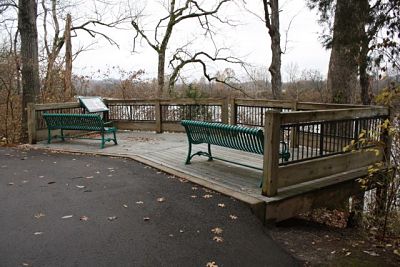
Located in Dover, Tennessee on the Cumberland River, this inter-active virtual tour includes pop-up information with historical interpretive markers (there is a zoom option for reading the signage). The tour also links to the Shiloh battlefield tour.

A land and naval battle, this Union victory opened up middle Tennessee and hastened the capture of the first southern state capital: Nashville.fort-donelson-image

 “The Confederates built upper and lower river batteries in an attempt to defend the strategic transportation and supply routes provided by the river and protect major supply bases in Clarksville and Nashville, Tennessee. They armed the batteries with heavy seacoast artillery”. – nps.gov

Fort Donelson National Cemetery – this National Military Cemetery was established in 1867 and includes veterans of the 19th and 20th century.

Note: get the full screen virtual tour experience by clicking the icon in the lower left of the video frame.  Some markers are embedded in the floating icons.

This content requires HTML5/CSS3, WebGL, or Adobe Flash Player Version 9 or higher.

Suggested Reading (Chapter II)


#fortdonelson #civilwar #virtualtour
Filed Under: Ships, The American Civil War, United States Navy, Virtual Tour

December 10, 2015 By Bob Henderson

Gunboat Vessels of Nashville

Gunboats that fought in The Battle of Nashville: 

These are some of the United States “Brown Water Navy” vessels that fought on the Cumberland River in December 1864, under the command of Lieutenant Commander Le Roy Fitch. There were six separate engagements from December 2 to the 15th of that year.

City Class U.S.S. Carondelet Ironclad Gunboat

Carondelet Photo

Seven city class gunboats were built by James B. Eads at a cost of $89,000 each. With 13 guns, from 30-pdr. Parrotts, up to 100-pdr., they were powerfully armed. Their 2.5 inch plating, plus wood backing, was not impenetrable, however. The sister ship Cairo was sunk by torpedo in December 1862. She was raised in 1964 and is on display at the Vicksburg National Military Park. The Carondelet was also involved in many other river battles including Forts Donelson and Henry, Island #10, and the siege of Vicksburg.

U.S.S. Neosho Ironclad Gunboat

USS Neosho Photo

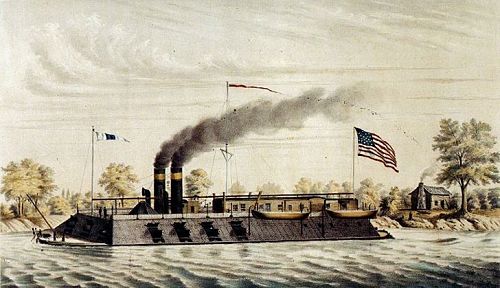
December 6, 1864 aboard the U.S.S. Neosho, Quartermaster John Ditzenback, and Pilot John H. Ferrell received the Medal of Honor for retrieving the United States flag which had been shot away.  Under heavy enemy fire, they left the safety of the armored pilot-house, and tied it to the main signal staff. This drawing was featured in Harpers Weekly.

USS Neosho Photo

The river monitor Neosho was hit more than one hundred times in one of the, many engagements at this site, severely damaging her stern house and chimney.  It narrowly escaped destruction when an unexploded shell lodged near her powder magazine. 78 years latter, her namesake would not be so lucky.  She was sunk by the Japanese in the Battle of Coral Sea, May 11, 1942.  

U.S.S. Silverlake Tinclad Gunboat

USS Silverlake Photo

This tinclad sternwheeler gunboat fought here.  She had a crew complement of 150 men. The boat carried eight 24 -pdr. brass guns. She also participated in action at Florence, Alabama, Palmyra, Tennessee, and the pursuit of Morgan’s raiders on the Ohio River

U.S.S. Fairplay Tinclad Gunboat

USS Fairplay Photo

This tinclad was a Confederate transport captured by the Union Navy at Milliken’s Bend, Louisanna on 18 August 1862.  It was the initial command vessel in the battle of Bell’s Bend for the Navy flotilla.  After the second engagement with the Confederates the tinclad was severely damaged. Commanding Officer Lieutenant Commander Le Roy Fitch then decided to transfer his flag to the more heavily armored U.S.S. Neosho.

The U.S.S. Moose and U.S.S. Brilliant tin clad was also part of this flotilla, but no know photo exists of her. 

Suggested readings:

#gunboats #nashville #civilwar #usn

Filed Under: Nashville, Ships, United States Navy

December 9, 2015 By Bob Henderson Leave a Comment

Johnsonville

Johnsonville in the Civil War: 

johnsonville-visitor-map
Vistor Center

Nashville was the spring board for the North in the Western Theater of the American Civil War. Johnsonville was the logistic supply base that was it’s life-line. Due to the unpredictable water level of the Cumberland River at certain times of the year, a rail line was built to connect Nashville to the Tennessee River. This logistics infrastructure ran as far as South Carolina to Gen. Sherman. Gen. Hoods invasion of Tennessee in the fall of 1864, set out to disrupt and destroy it.

“During the Civil War, Johnsonville was the location of a Union supply depot that moved food, guns, uniforms and everything else needed to supply an army. Steamboats brought supplies up the Tennessee River to the Johnsonville Depot. The supplies were transferred on to railroad cars and transported along the 78 mile Nashville & Northwestern Military Railroad to Nashville, Tennessee and on to General William Tecumseh Sherman’s army in Georgia”…read more

This historical site was the location of the audacious raid by Lieutenant General Nathan Bedford Forrest in November of 1864. This was the commencement of Lieutenant General John Bell Hood’s Tennessee champaign. Forrest’s raid here captured the U.S.S. Undine and resulted in the burning the 6 other naval warships and over 6.7 million dollars of U.S. Army supplies. The 2500 Johnsonville man garrison included the 12th, 13th, and 100th United States Colored Troops (USCT). These African American soldiers would go on to fight valiantly in the Battle of Nashville, having 5 consecutive color bearers shot down on Peach Orchard Hill.

Johnsonville State Historic Park, is located 3 miles north of Highway 70 in New Johnsonville, and has a new interpretive center (2013). The 527 wooded park offers some of the most well preserved earthworks in the country. Across the river near Camden, Tennessee, the Nathan Bedford Forrest State Park offers a commanding view of the area, located where the Confederate force attacked from.

Note: get the full screen mode by clicking the icon in the lower left of the video frame. A zoom option is available also. This virtual tour also includes other cavalry battle sites.

This content requires HTML5/CSS3, WebGL, or Adobe Flash Player Version 9 or higher.

Suggested Reading:

#johnsonville #virtualtour


Filed Under: Cavalry, Forrest Cavalry, Ships, The American Civil War, United States Navy, Virtual Tour

December 20, 2014 By Bob Henderson Leave a Comment

Midshipman Fitch

Midshipman Fitch at the U.S. Naval Academy


The Naval Academy transformed it self from an upper-crust finishing school, into a serious international military academy in the early 1850’s. The United States Marine Corp would take step further with training of their Naval Aviation Officer Candidates in the 20th century.

“many Midshipmen objected to a rule which required that they clean their rooms and make up their beds”

The following excerpt is from Le Roy Fitch: The Civil War Career of a Union River Gunboat Commander

– Myron J. Smith, Jr. 2007

During 1851-1853, several midshipman dormitories were completed on the grounds of the naval academy, These held a total of 98 two-person rooms, each 15 feet square. These quarters were outfitted with a pair of iron beds, one table, two chairs, and several other hygiene-connected items. Despite the fact that African American attendants, who were mostly likely slaves, did much of the work (including bringing in water and brushing clothes and shoes), many Midshipmen objected to a rule which required that they clean their rooms and make up their beds. Some went so far as to petition the superintendent in November 1853 requesting “that we may have servants to make up our beds and sweep out our rooms.” Others objected that “during the past month, we have been compelled from time to time not only to light our lamps, bring up our wood and make our fires, but also to black our boots and in some cases to bring our water from the pump.” The superintendent did not reply.

In his excellent study of the antebellum naval academy, Charles Todorich discusses a point about midshipmen in the early 1850s which, when reviewed together with Fitch’s USNA discipline record, displays the free-spirited nature of the future naval hero better than most available contemporary sources. There were present on the Severn in those years a number of mid-shipmen (known as Oldsters) still following the seven year curriculum, which valued practical application over theoretical study. Many of these young gentlemen thought the academy’s new order, with its attention to codes of strict discipline, scholarship, and other “theoretical truck,” was derogatory. These Oldsters went out of their way to bend or break academy rules as it suited them…

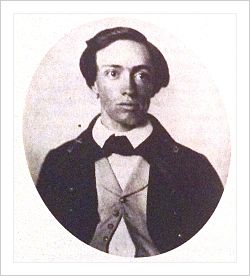
photo of Le Roy Fitch
Midshipmen Le Roy Fitch


His appointment secured by his half brother, Congressman Graham Newell Fitch, 16-year-old Le Roy Fitch entered the U.S. Naval Academy at Annapolis, Maryland with 37 others on October 1, 1851. Graduating No. 10 in his class on June 20, 1856, the new junior officer was 21 years old and would know no other life than that of a seaman for the next 17 years. This is one of only two photographs of Fitch known to exist; the other was taken in 1870 just five years before his death (Captain Robert F. Bradford Collection, Naval Historical Center).

Suggested readings:


Filed Under: United States Navy

December 2, 2014 By Bob Henderson Leave a Comment

150 Years

150 Years after The Battle of (west) Nashville

December 2, 2014


kelleys-point_optMany historians don’t know, or don’t believe, that much happened here at Bell’s Bend in the Battle of Nashville. But the Official Record refers to it specifically…read more


This content requires HTML5/CSS3, WebGL, or Adobe Flash Player Version 9 or higher.


Suggested Reading:


Filed Under: Blog, Nashville, Ships, United States Navy, Virtual Tour

  • « Previous Page
  • 1
  • 2
  • Facebook

Battlefield Trust

CWPT Link

Tennessee State Museum

DSC02614_5_6_7_8_opt

Fort Negley

Negely

USCT Charge on Peach Orchard Hill

USCT Painting

Travelers Rest

Travelers Rest

Belle Meade Plantation

Belle Meade Plantation

Battle of Franklin

Franklin

Nashville Naval Battle

Kelley’s Point Video

Nashville MIA’s

Copyright © 2026 · Bob Henderson. All rights reserved.